Havebury housing cut the oil use for tenant's hot water by 65%. Here’s how they did it.
Total Savings
All savings are calculated over two years and compared to the current oil price cap.
£365 saved
546 days with zero oil boiler firing
1,031 kWh captured from excess solar
It’s been more than two years since Havebury Housing fitted a Mixergy smart hot water cylinder in one of its oil-heated homes, and the savings have kept growing. With heating oil prices still well above where they started the year, we’ve gone back through the data to see what it means for housing providers with tenants on oil this winter.
Between April 2024 and July 2026, the home used 151 litres less oil for hot water than it did before, along with 1,031 kWh less electricity from the grid. That’s around £158 a year back in the resident’s pocket and 575 kg less carbon.
Why this winter matters for homes on oil
Around 1.5 million UK households rely on heating oil, and this year has been a hard one for them. The Competition and Markets Authority found the average price rose from 64p a litre in February 2026 to a peak of 123p in April, and it was still at 104p in May. A typical 500 litre order went from around £320 to £520 in a single month.
Oil customers aren’t covered by the energy price cap, and the CMA found gaps in the support available to vulnerable customers. Providers can’t change what oil costs, but they can change how much of it each home needs, and hot water is often where a lot of it goes to waste.
Where the oil was going
Before the retrofit, the home had a 120 litre cylinder from the 1980s with a loose insulating jacket, and the oil boiler reheated it every day. The resident and her husband were only drawing a couple of litres of hot water a day from it, so roughly 97% of the oil that went into the cylinder was lost through the jacket.
Most of their hot water (around 95%) actually came from a 9.5 kW electric shower, which is one of the most expensive ways there is to heat water. They were paying for oil they weren’t using and for the dearest electricity in the house, and we’d expect to find the same setup in plenty of older off-gas homes.
What Havebury Homes installed
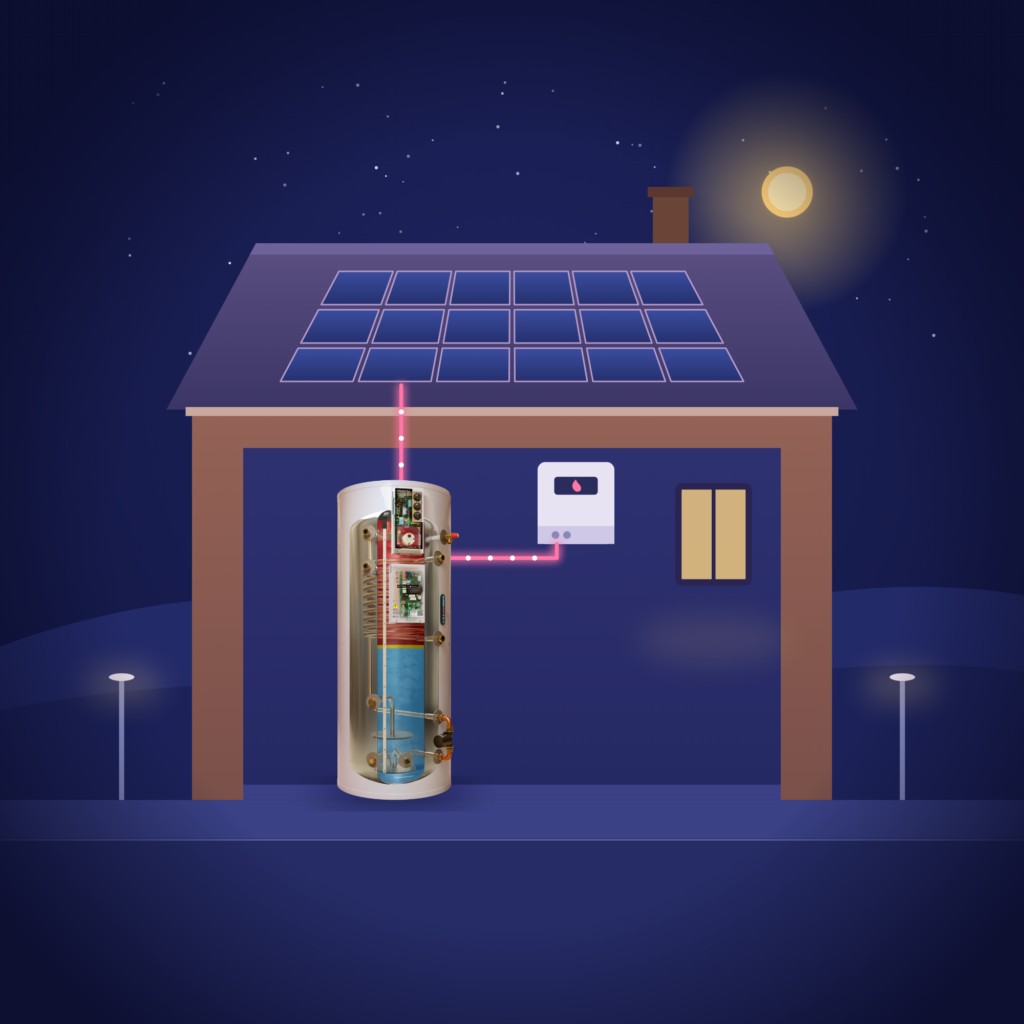
In April 2024, as part of its retrofit programme, Havebury fitted a Mixergy cylinder with a built-in solar diverter. The home already had solar PV, so spare electricity from the panels now goes into the cylinder before the oil boiler is needed. The electric shower was swapped for a mixer shower fed from the cylinder, and the existing oil boiler stayed in place as backup, so there was no major work and nothing new for the resident to learn.
Why the savings happen
Three changes explain most of it.
The first is heating only what’s needed. Our cylinders heat the hot water a household is likely to use, rather than reheating the whole cylinder every day, so far less heat is wasted.
The second is putting solar first. Free electricity from the panels tops up the cylinder through the day, and the oil boiler only fires when solar can’t cover demand.
The third is replacing the electric shower. Hot water now comes from the cylinder, mostly heated by solar, instead of a 9.5 kW shower pulling from the grid every time it runs.
Two years of results
The savings grew from the first year to the second. In year two the home used less oil, had more oil-free days and got more of its hot water from solar than in the first.
| Period | Electricity saved | Oil-free days | Money saved | CO₂ saved |
| Apr 2024 – Mar 2025 | 444 kWh | 185 of 354 (52.3%) | £140 | 222 kg |
| Apr 2025 – Mar 2026 | 458 kWh | 240 of 365 (65.8%) | £157 | 245 kg |
| Apr 2026 – Jul 2026 | 129 kWh | 121 of 122 (99.2%) | £67 | 108 kg |
| Total | 1,031 kWh | 546 of 841 (64.9%) | £364 | 575 kg |
Most of the money saved (about 71%) comes from no longer running the electric shower, while most of the carbon saved (about 67%) comes from burning less oil, because oil is cheaper per kWh than electricity but produces roughly twice the emissions. All figures cover hot water only and compare what the home actually used before and after the retrofit.
What this means for providers with tenants on oil
If you have tenants on oil, start by looking at how many of their homes have an old cylinder being reheated every day, or an electric shower doing most of the work. In this home, fixing that cut bills in the first year without replacing the boiler or bringing in a whole new heating system.
Our cylinders work with the oil boilers, solar PV and heat pumps that providers already have, so the same cylinder can stay put when the boiler is eventually replaced. Mixergy also performs in RdSAP, which helps homes on the route to EPC C.
All savings are calculated by Mixergy using live data from the cylinder, which shows how much water was heated, to what temperature and when. We compared this with the home’s previous setup, which was an older conventional cylinder reheated daily by the oil boiler plus an electric shower.
Costs use average oil and electricity prices for each period, including VAT, and carbon uses government emissions factors. Figures cover hot water only and are indicative, so please treat them as a guide rather than an exact saving.

