Budget 2025: A Turning Point for Electrification – But Our Compliance Models Need to Catch Up
Tom Oldfield, Head of External Affairs at Mixergy, shares his views on the recent UK Government Budget announcement.
The UK Government’s Budget 2025 has delivered a long-awaited correction to the way the UK prices energy. Changes to electricity levies and standing charges begin to rebalance the relationship between gas and electricity. Nesta’s analysis highlights the shift. All-electric homes now stand to gain, bringing us closer to an energy system where low-carbon choices cost less not just in principle but in practice.
For developers, landlords and policymakers, this is a pivotal moment. It strengthens the economics of heat electrification and opens the door to cleaner, more resilient housing stock.
Yet one of the most influential tools shaping design and compliance decisions has not kept pace.
SAP 10 and RdSAP 10 are still anchored to outdated energy prices
Despite falling electricity costs and rising gas volatility, SAP 10 and RdSAP 10 continue to use historic energy price assumptions. These assumptions directly drive EPC outcomes and influence decisions across new-build design, social housing retrofit, procurement frameworks and funding schemes.
When electricity remains too expensive in the model, all-electric homes appear less favourable on paper even as real-world bills tell a different story. The result is a widening gap between policy intent, household economics and the compliance framework.
A simple short-term fix before wider EPC reform
While full EPC reform is on the horizon, there is an immediate, straightforward step government could take.
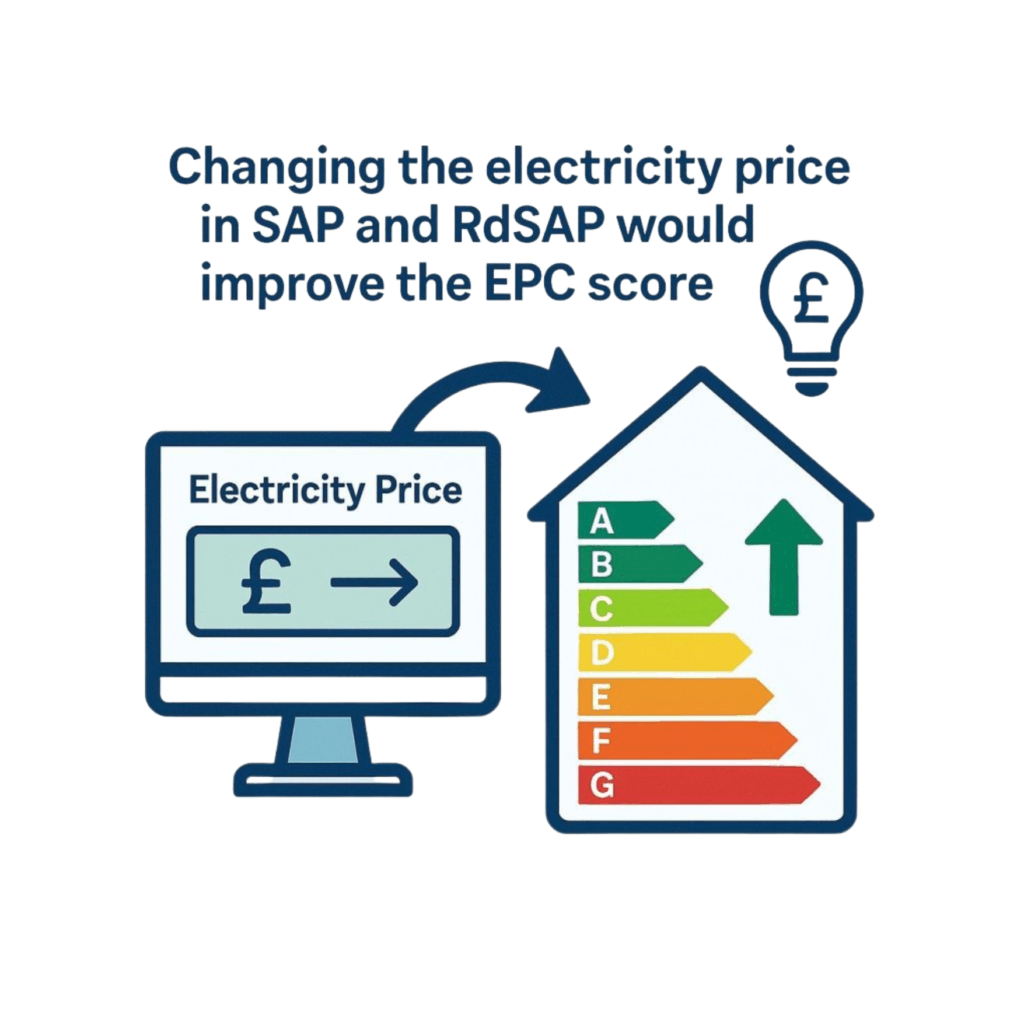
Update the electricity price assumptions in SAP 10 and RdSAP 10 to reflect the direction set by the Budget.
Doing so would:
- Improve EPC results for well-designed all-electric homes
- Support local authorities and developers targeting net-zero commitments
- Encourage fairer comparisons between gas and electric systems
- Reduce barriers to heat electrification without delaying wider reform
This adjustment would not alter the structure of SAP. It would simply ensure the model reflects contemporary energy pricing rather than outdated ratios.
Home Energy Model: a more accurate long-term solution
The Home Energy Model (HEM), which will replace SAP, is already structured to better reflect real-world home energy use. Crucially, it recognises the value of smart hot water and the wider role of energy-smart appliances.
This marks a major shift in how compliance will work. Rather than rewarding higher consumption or larger nominal system sizes, the HEM values intelligent energy behaviours such as:
- Heating only the hot water needed
- Reducing peak-time demand
- Using more low-carbon electricity when it is abundant
- Integrating with smart tariffs that lower bills without compromising comfort
This aligns compliance with how modern, efficient homes should operate and how the grid will increasingly need homes to operate.
Closing the gap between policy, modelling and reality
The Budget has set a clear direction. Electricity prices are moving toward a more balanced, fairer structure that supports decarbonisation. The Home Energy Model will provide the long-term regulatory framework for this world.
The missing piece is the short-term alignment.
Updating SAP 10 and RdSAP 10 price assumptions would act as a pragmatic bridge. It would give designers, landlords and housing providers confidence that the compliance framework reflects current running costs and future energy policy. And it would encourage the widespread adoption of technologies that improve efficiency, lower bills and support system stability.
Smart hot water is already delivering what the system needs
Smarter hot water is one of the most immediate, practical ways to reduce household energy use and strengthen overall system performance. Volumetric heating, peak-shifting and better use of renewables are already cutting hot-water energy demand by up to 40%, supporting healthier homes and easing pressure on the grid.
These benefits are widely recognised. The Home Energy Model already accounts for them. Bringing SAP assumptions into line with today’s pricing would ensure that compliance frameworks also recognise the advantages of modern, intelligent systems.
The Budget has made low-carbon living more affordable. Now the modelling behind EPCs must evolve too.
Smart hot water is playing its part. It is time for our compliance tools to do the same.