Warm Homes Plan spotlights Mixergy smart hot water
The Government’s Warm Homes Plan sets a clear direction of travel for home decarbonisation, combining large scale public investment with delivery reform. Measures such as the expansion of the Boiler Upgrade Scheme to include air-to-air heat pumps and heat batteries, the introduction of zero and low interest consumer finance, reform of EPCs, a requirement for smart functionality in clean heat technologies, and the creation of a Warm Homes Agency to coordinate delivery all point toward a more system-led, outcomes-focused approach.
It is also encouraging to see innovation and real-world deployment explicitly reflected in the document.
Smart hot water appears twice and that matters.
Smart hot water in real-world delivery
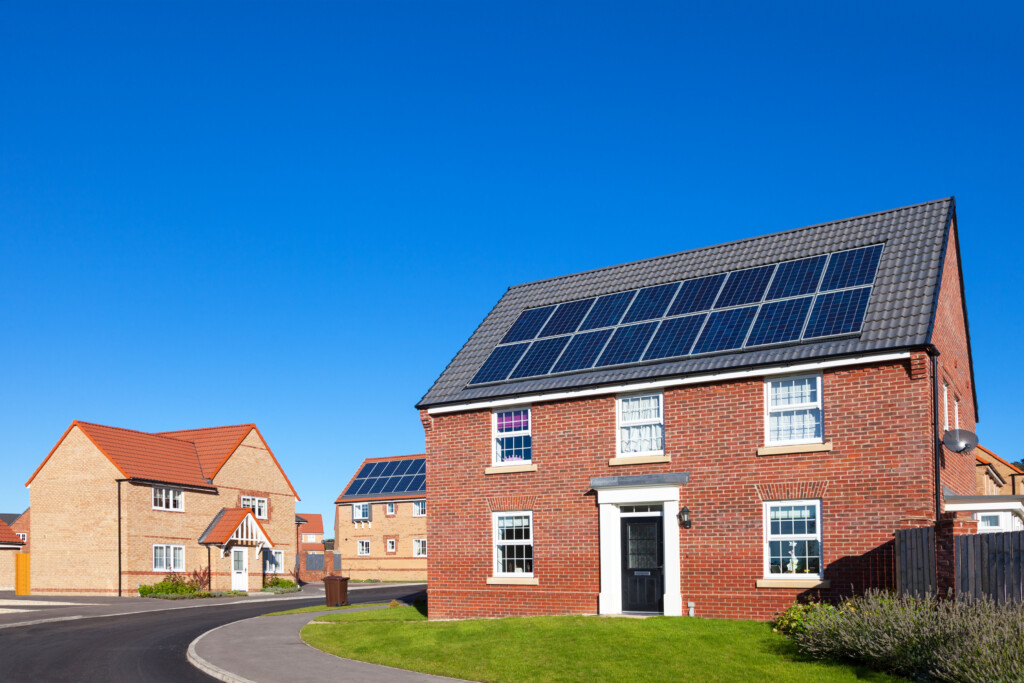
In Chapter 3, the Net Zero Terrace Streets case study in Rossendale describes a street-by-street retrofit model that includes our Mixergy smart hot water tanks alongside shared ground source heat pumps, rooftop solar and battery storage. Smart hot water is presented as part of the core system architecture, supporting flexibility and efficient operation.
This is an important signal. It shows policy is starting to recognise that decarbonisation at scale is not only about swapping individual appliances. It is about how systems work together across homes and streets, and how those systems respond to the realities of the electricity network.
Mixergy MESH recognised as Heat Pump Ready innovation
Later in the plan, Mixergy’s Making Efficient Systems around Heat Pumps (MESH) project is profiled as a Heat Pump Ready innovation. The plan highlights the consolidation of the heating buffer vessel and hot water cylinder into a single smart tank, reducing system complexity, with potential component cost savings. Early field trials are also noted, showing improved operational performance through automated control and time-of-use optimisation.
For everyone working on electrified heat at a system level, this recognition matters. It reflects a shift away from viewing hot water as passive plumbing and toward recognising it as controllable thermal storage that underpins efficient, flexible homes.
What needs to happen next
There is still more to do. We continue to see a strong case for DESNZ to ensure indirect cylinders are appropriately incorporated into upcoming Smart Secure Electricity Systems legislation, so smart functionality is properly defined and rewarded across real-world system configurations.
Mixergy will continue to advocate for smart hot water to be recognised as a standalone energy saving measure in Government funded projects, because it is one of the lowest disruption ways to cut bills, reduce carbon, and make electrification work at scale.
Deliver healthier homes and tackle fuel poverty with smart hot water
For social housing providers, Mixergy helps cut tenants bills today while supporting compliance in a cost-effective way. If you want to see how Mixergy can support your homes and your targets, get in touch with the team below.