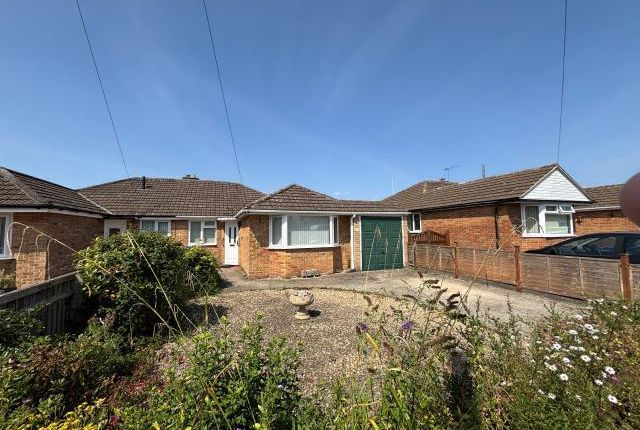
The R&D Bungalow
Electrifying the UK’s housing stock over the next few decades is a daunting task involving many trade-offs alongside many open questions. Here is a list of some of the big ones:
- Are monobloc heat-pumps working in tandem with traditional wet systems the right way forward?
- What about split air to air heat-pumps which can also cool?
- Should the hot water and heating systems be kept together or separated?
- Does deep retrofit help or harm air quality?
- Is thermal mass really worth having or does it just increase heat losses?
- Which assets deliver the best home flex potential with solar PV when factoring in renewable tariffs?
- Are heat recovery systems viable for retrofit or just diminishing returns + technical headache?
- Can rain-water harvesting ever pay for itself?
We had been wrestling with these questions for more than a decade at Mixergy when out of the blue, an opportunity came along. My partner Katie and I suddenly discovered that we would need more living space. To that end, we bought a dilapidated bungalow in Kidlington Oxfordshire. Given the extent of work needed, why not turn this little house into a living lab at the same time try to answer some of the questions above?
The place was in a very sorry state. The suspended wooden floor had become infested with woodworm whilst damp and black mould festered throughout the house.
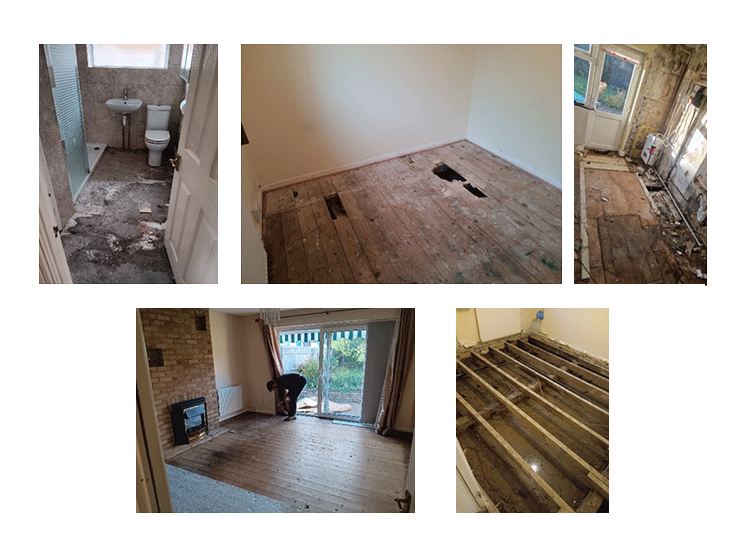
The house felt like a totem to failed interventions from previous builders, energy companies and silo’d trades. Whilst the shell had good glazing and cavity wall insulation, there was almost no ventilation. The loft had been heavily insulated but glass wool was carpeted over the roof vents. A downpipe had been routed into an airbrick on one side of the house, filling the sub-floor void with water whilst a storm drain was left blocked at the front. To top it all off, a groundworks company had concreted around the house all the way up to (and over) most of the air bricks.
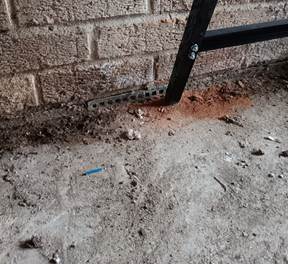
It was clear that a major operation was required and with a hard deadline approaching (June 2026), we set to work rebuilding everything from within.
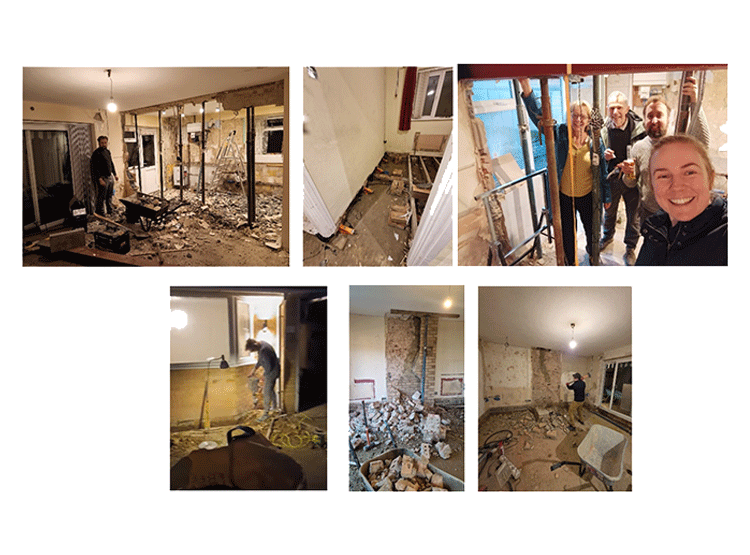
The old heating system comprised of a gas fired condensing system boiler which heated a vented hot water cylinder and wet radiators throughout the house alongside old radiators through a single pipe arrangement (horribly inefficient in comparison to modern flow and return schemes).

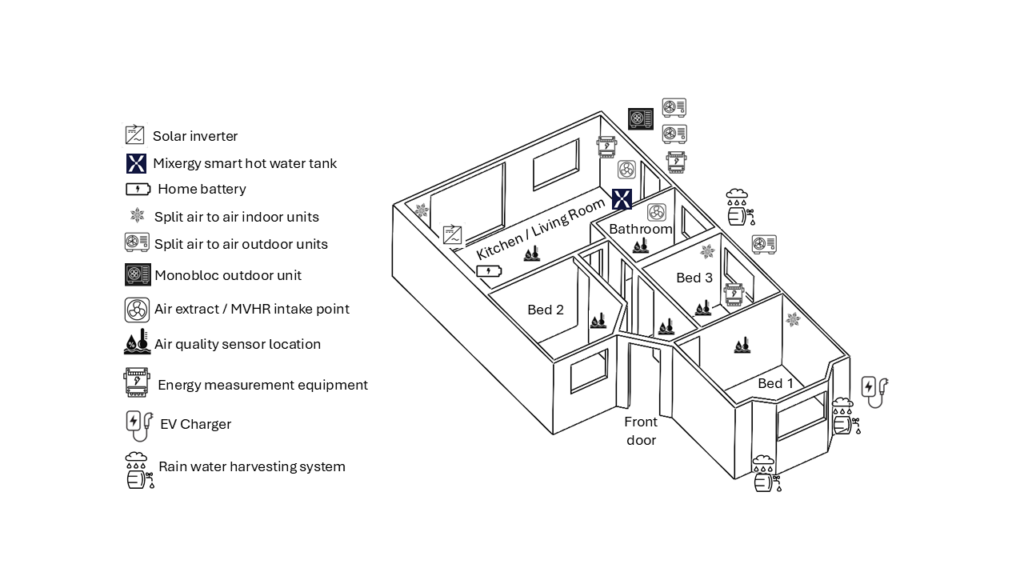
As we continued to rip out everything out, we started to plan around the new systems which would go in with a view to running repeatable tests around different approaches to electric heating, cooling and ventilation. Our primary objective was to compare the performance of a wet monobloc heat-pump to a split air to air arrangement which could provide both heating and cooling in conjunction with a Mixergy tank for hot water.
We also wanted to understand the impacts of modern glazing, high air tightness and cavity insulation around ventilation and air quality. To this end we set out with the plan shown by Figure 5.
The biggest decision at the outset centred around the flooring throughout the house, all of which had to be replaced. There were two key options: a concrete floor with an integral underfloor heating system (Figure 7); and a suspended floor with a surface heating matrix integrated within the floorboards (Figure 8).
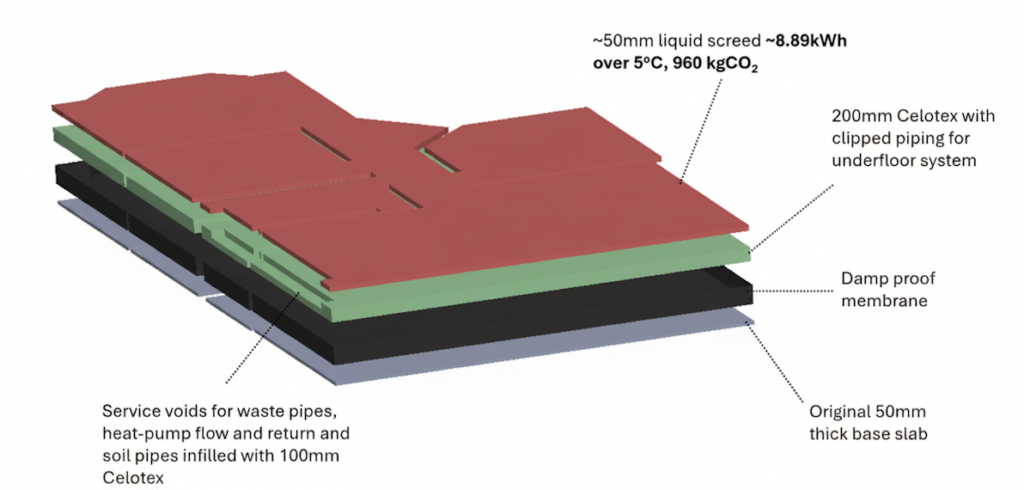
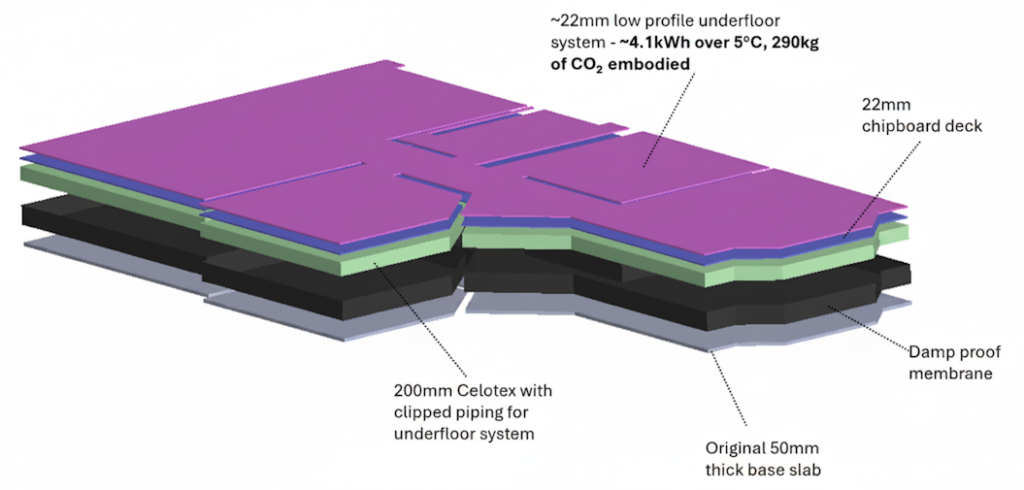
A concrete floor would provide more than twice the thermal mass as compared to a traditional timber construction. This would allow us to ‘charge the home’ during off-peak periods on the one hand, on the other hand, the heating would be less responsive as a result leading to potentially higher overall demand.
In the end, we opted for concrete to fully seal up the house against any future damp problems. This would allow us to test an ‘ideal’ wet monobloc system with high thermal mass against a more responsive split air to air system as too extreme ends of the retrofit spectrum.
The underfloor system involved over 400 meters of pipework split across seven zones.
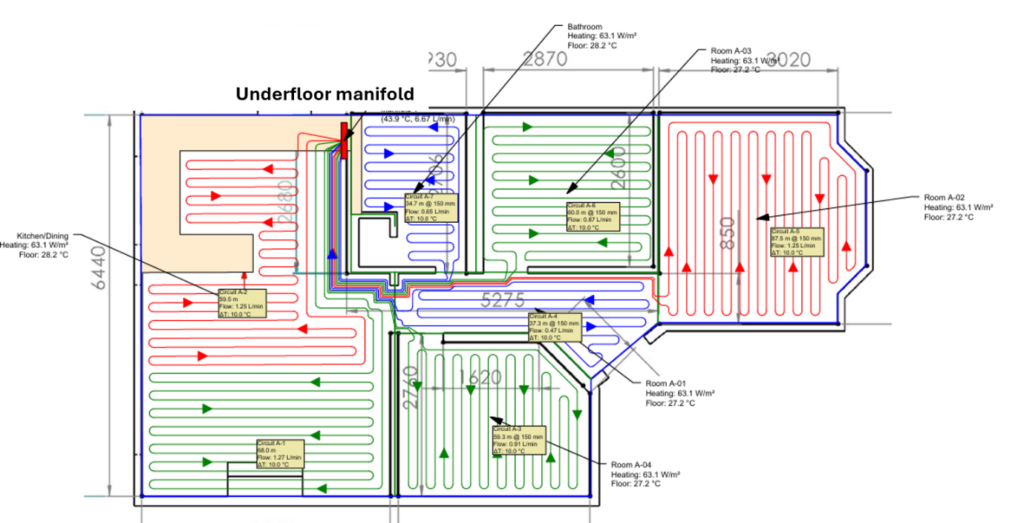
A couple of weeks of prep went into the ground over Christmas 2025 to get us ready for the concrete pour scheduled for the New Year.
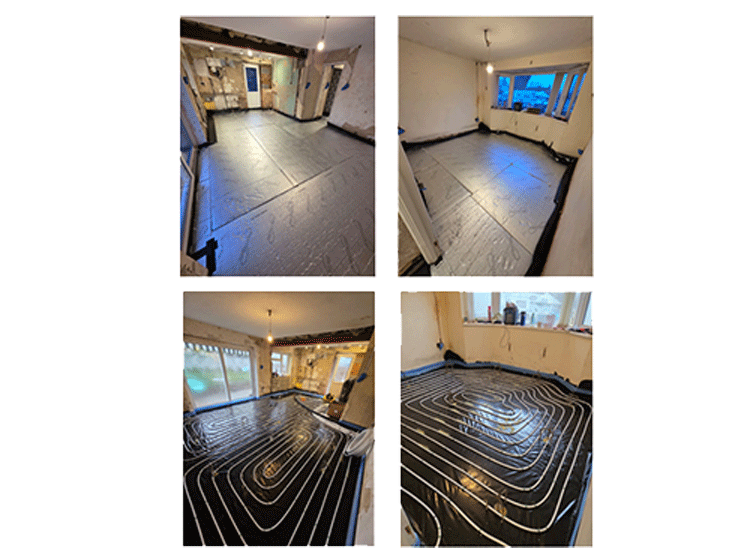
To go from a damp hole in the ground to a pristine liquid screed, looking like the surface of an ice rink, was a wonderful moment!
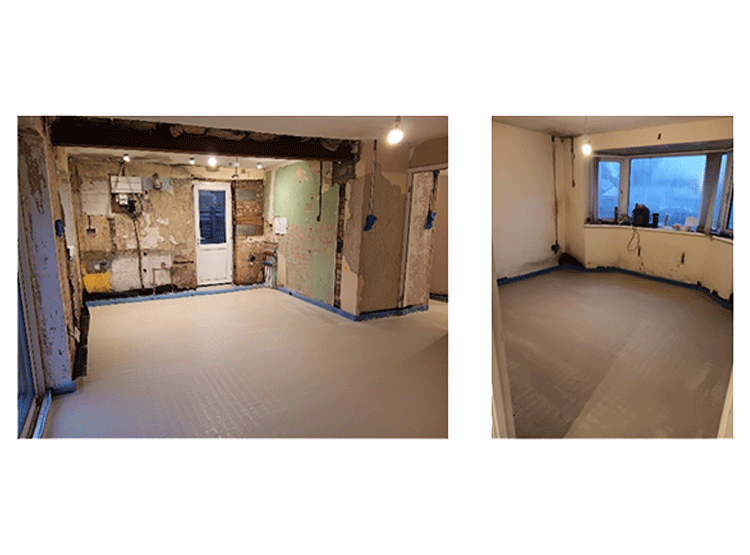
All that was left was a little plumbing, plastering, tiling, carpentry, electrical works and painting ahead of moving in.
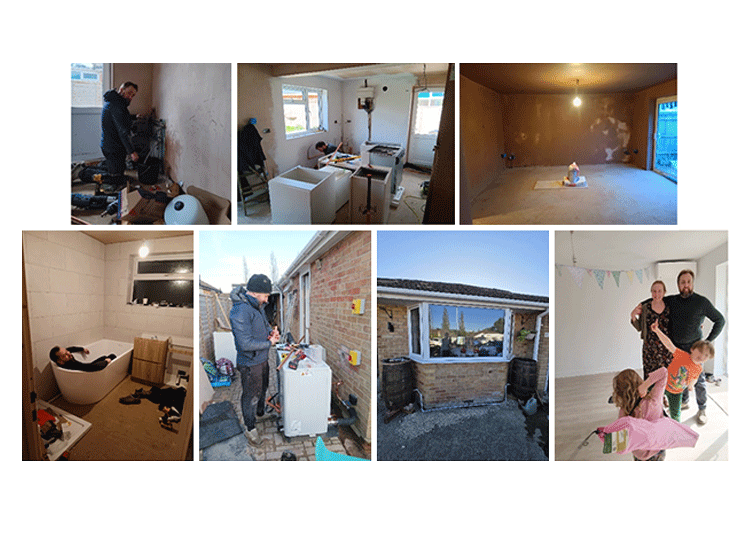
We are now at a point where we have moved in already, a few weeks ahead of the deadline! There are already a few interesting observations/measurements underway:
- Keeping the indoor bedroom to below 19C during our first heat-wave cost around 1 kWh (40 pence) per evening
- Using a portable AC unit for the same purpose consumes ~5X as much energy
- Trickle events alone are insufficient to maintain air quality in the smaller bedrooms, windows must be opened at times.
- A single afternoon of Oxfordshire rain can fill the rain water harvesting system…
- A small, 120 litre Mixergy tank can sustain multiple shower heads and a full bath… although actual demand varies by 80% depending on which shower head you use!
This blog is the first in a series of articles covering various themes around deep retrofit as experienced first hand through the lens of the Mixergy R&D bungalow.
If you would like to learn more about our experience and how this might inform how your specification could be enhanced with Mixergy’s technology, do get in touch.